

Australia’s aged care industry is growing rapidly, creating strong demand for compassionate and skilled support workers. If you enjoy helping others and making a positive impact, a career in aged care could be the right fit for you.
Aged care workers play an important role in supporting older Australians through residential, home, and community care services.
In this guide, we’ll explain how to become an aged care worker, the qualifications required, and the career pathways available in Australia.
What Does an Aged Care Worker Do?
An aged care worker provides practical, emotional, and personal support to elderly individuals who may need assistance with daily living activities.
Responsibilities may include:
- Personal care and hygiene support
- Meal preparation and feeding assistance
- Mobility and independence support
- Medication reminders
- Companionship and emotional care
- Health and safety monitoring
Aged care workers may work in:
- Residential aged care facilities
- Home care environments
- Community care services
- Retirement villages
Why Choose a Career in Aged Care?
Aged care offers a rewarding career pathway with strong job demand across Australia.
Benefits of working in aged care:
- Strong employment opportunities
- Flexible work arrangements
- Career progression options
- Meaningful daily work
- Opportunities to specialise in dementia or disability support
How to Become an Aged Care Worker in Australia
If you’re wondering how to become an aged care worker, the process usually involves completing nationally recognised training and gaining practical experience through vocational placement.
Step 1: Complete an Accredited Qualification
The most common entry-level qualification is the Certificate III in Individual Support (Ageing). This course is widely recognised as the standard entry pathway into aged care roles in Australia.
The course teaches essential skills such as:
- Providing individualised support
- Supporting independence and wellbeing
- Communication in health and community services
- Infection prevention and control
- Safe work practices
- Legal and ethical responsibilities in care settings
Many training providers also offer specialisations in ageing, disability, or home and community care.
Step 2: Gain Practical Experience
Training for aged care workers usually includes vocational placement hours in real care environments.
Practical placement helps students:
- Apply classroom knowledge in real situations
- Build confidence working with clients
- Learn workplace expectations
- Develop communication and care skills
At Sage Education Australia, vocational placement support is included for eligible students, helping learners gain industry experience before entering the workforce.
Step 3: Meet Workplace Requirements
Depending on the employer, aged care worker requirements in Australia may include:
- Police checks
- NDIS worker screening (for roles involving disability support)
- First Aid certification
- Vaccination requirements
- Manual handling training
Employers may also look for strong interpersonal skills and a compassionate attitude.
Best Aged Care Courses in Australia
Choosing the right qualification is an important step toward building a successful aged care career. Some of the most recognised aged care courses in Australia include:
- Certificate III in Individual Support (Ageing)
- Certificate III in Individual Support (Home and Community)
Advanced Qualifications and Career Progression
After gaining experience, some workers continue their studies through:
- Certificate IV in Ageing Support
- Diploma of Community Services
These advanced qualifications can help workers progress into senior support, leadership, coordination, and specialised care roles within the aged care and community services sector.
Online vs In-Person Training Programs
Many training providers now offer flexible learning formats to suit different student needs and lifestyles.
Online or Blended Learning
Online and blended programs allow students to complete theory components remotely while still gaining practical experience through vocational placement.
Classroom-Based Learning
In-person training provides face-to-face support, hands-on learning opportunities, and direct interaction with trainers and classmates.
Both study options can help students develop the practical and professional skills needed for the aged care industry.
Aged Care Worker Qualifications Australia
Most employers prefer nationally recognised qualifications such as Certificate III in Individual Support (Ageing), which prepares students for entry-level aged care roles across residential, home, and community settings.
Course Duration and Study Options
The duration of aged care courses can vary depending on the qualification level and study mode.
Many students begin with the Certificate III in Individual Support, which can often be completed within several months, including vocational placement requirements.
Training providers may offer:
- Classroom-based learning
- Online or blended study options
- Part-time and full-time training
- Practical workplace placement
Flexible learning options help students balance their studies with work, family, and personal commitments.
Skills Needed for Aged Care Workers
Technical training is important, but personal qualities also play a major role in success within the industry.
Essential skills include:
- Compassion and empathy
- Communication skills
- Patience and resilience
- Teamwork and collaboration
- Problem-solving abilities
These skills help aged care workers provide safe, respectful, and person-centred support.
Aged Care Career Pathway
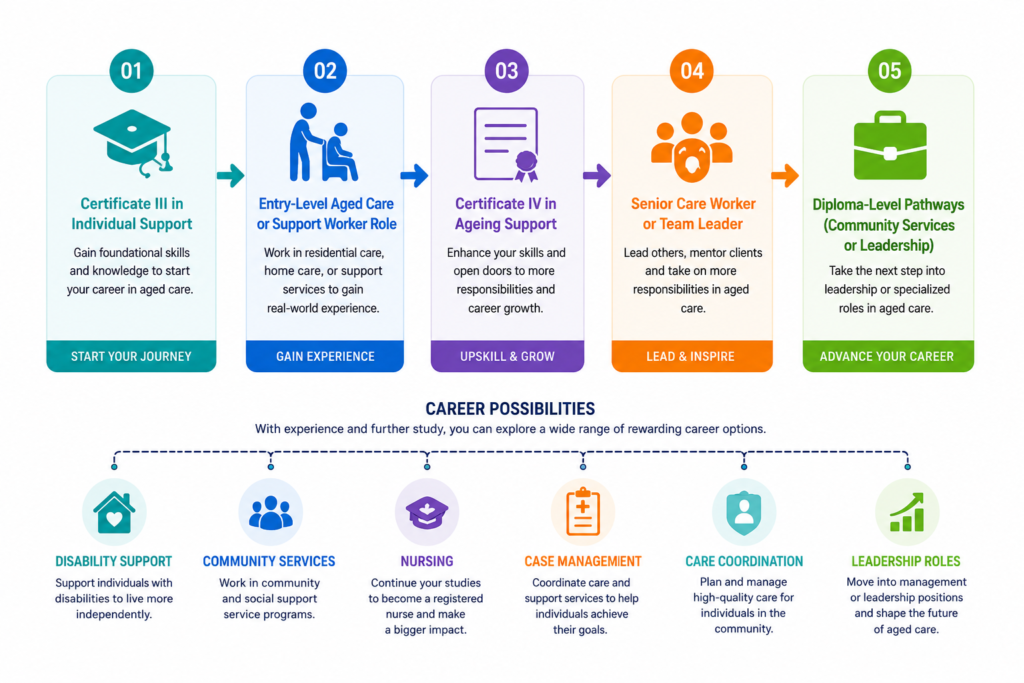
One of the biggest advantages of working in aged care is the opportunity for long-term career growth and professional development.
A typical aged care career pathway may look like this:
- Certificate III in Individual Support
- Entry-level aged care or support worker role
- Certificate IV in Ageing Support
- Senior care worker or team leader position
- Diploma or advanced community services pathways
Many aged care professionals also progress into disability support, community services, nursing pathways, or case management roles.
Aged Care Jobs Australia
There is strong ongoing demand for qualified carers and support workers throughout Australia.
Common aged care jobs in Australia include:
- Personal care assistant
- Residential care worker
- Home care support worker
- Community support worker
- Respite care worker
- Lifestyle support worker
Graduates with practical training and recognised qualifications are often well-positioned for employment opportunities.
Challenges and Rewards of Working in Aged Care
Working in aged care can be both challenging and highly rewarding.
Common challenges:
- Physical demands
- Emotional situations
- Shift-based work
- Supporting clients with complex needs
Key rewards:
- Building meaningful relationships
- Helping improve quality of life
- Supporting independence and dignity
- Career satisfaction and purpose
Choosing the Right Training Provider
When selecting a course provider, consider:
- Nationally recognised qualifications
- Practical placement support
- Flexible study options
- Industry connections
- Student support services
- Experienced trainers
Choosing a reputable training provider is especially important in Australia’s regulated vocational education sector.
Exploring Aged Care Courses in Australia
When choosing an aged care course, it’s important to select a registered training organisation that offers nationally recognised qualifications and practical placement opportunities.
At Sage Education Australia, students can explore flexible aged care and community service courses designed to prepare them for real workplace environments.
Start Your Aged Care Journey Today
Begin your rewarding healthcare career with Sage Education Australia. Our nationally recognised aged care and community service courses are designed to equip students with the skills and experience needed for real-world employment.
Explore aged care and community service courses at Sage Education Australia and take the first step toward a rewarding healthcare career today.
Frequently Asked Questions (FAQ)
1. What qualifications do I need to become an aged care worker in Australia?
Most employers require a nationally recognised qualification such as the Certificate III in Individual Support (Ageing). This course provides the essential skills needed to work in residential, home, and community care settings.
2. How long does it take to become an aged care worker?
The duration varies depending on the course and study mode, but the Certificate III in Individual Support can often be completed within a few months, including practical placement.
3. Do I need experience to start working in aged care?
No prior experience is required for entry-level roles. However, completing a recognised qualification and vocational placement helps improve job readiness and employability.
4. What skills are important for aged care workers?
Key skills include compassion, patience, communication, teamwork, problem-solving, and the ability to provide person-centred care.
5. Where do aged care workers usually work?
Aged care workers can be employed in residential aged care facilities, home care services, community support programs, and retirement villages.
6. Is aged care a good career in Australia?
Yes, aged care is a growing industry in Australia with strong job demand, flexible work options, and opportunities for career progression into senior or specialised roles.
7. What is the career path in aged care?
A typical pathway starts with a Certificate III in Individual Support, followed by entry-level work. With experience, workers may progress to Certificate IV in Ageing Support or Diploma-level qualifications.