

Not sure what working in aged care looks like day to day? You’re not alone. Many people consider this career because it offers stable job opportunities, meaningful work, and strong demand across Australia, but aren’t clear on what the role actually involves.
The good news is you don’t need prior experience to get started.
Whether you’re exploring career options, planning to enrol in a training program, or already working in the sector, this article gives you a clear picture of what’s expected from aged care support workers every day.
What Does an Aged Care Worker Do?
An aged care worker, also known as an aged care support worker, plays a vital role in supporting older people to live safely, comfortably, and with dignity. These workers support older people with everyday tasks so they can live safely, comfortably, and with dignity.
You’ll typically work in:
- Residential aged care facilities
- Community care settings
- In‑home support environments
- Retirement villages
This is a people-focused role, combining practical care with emotional support.
Can You Become an Aged Care Worker?
Yes, even if you’re starting from scratch. Most people enter this field with:
- No prior healthcare experience
- A career change from another industry
- A need for flexible, job-ready training
With the right training, you’ll learn everything required to start working confidently. Training from providers such as Sage Education Australia helps aspiring workers develop the skills needed for this rewarding career.
Why Understanding Aged Care Worker Duties Is Important
Knowing the duties of an aged care worker helps you:
- Prepare for the responsibilities of the role
- Understand industry expectations
- Determine whether the job fits your strengths and values
- Excel in your career and deliver quality care
Core Duties of an Aged Care Worker
Here are the main aged care worker duties and responsibilities you can expect on the job:
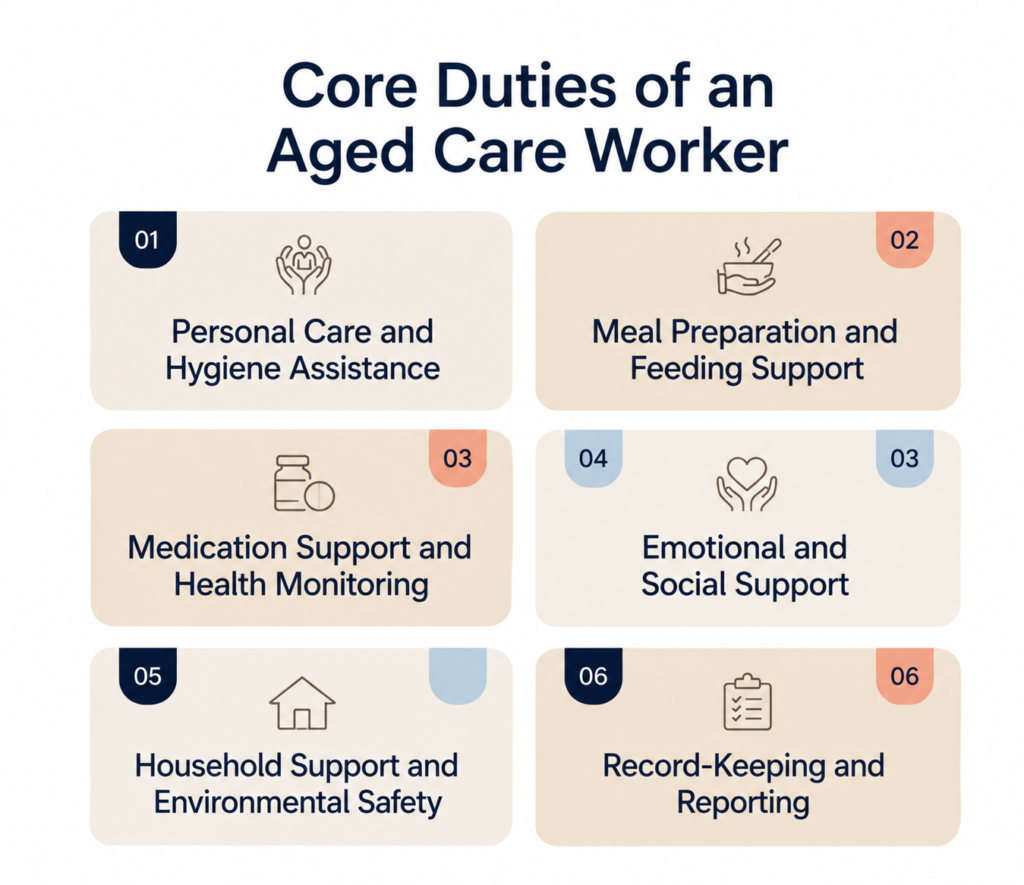
1. Personal Care and Hygiene Assistance
A major part of the role is helping clients with daily activities, including:
- Assisting with washing and bathing
- Helping with dressing and grooming
- Supporting toileting needs
- Assisting with mobility and transfers
This is the foundation of the role, helping people maintain dignity and independence.
2. Meal Preparation and Feeding Support
Aged care workers often:
- Prepare nutritious meals tailored to dietary needs
- Assist clients with eating when required
- Monitor food and fluid intake
- Report any changes in appetite
This is one of the most common tasks of an aged care worker, ensuring good nutrition, health and recovery.
3. Medication Support and Health Monitoring
While aged care workers don’t prescribe medication, they often are responsible for:
- Reminding clients to take prescribed medications
- Recording medication schedules
- Notifying health professionals if there are side effects or concerns
- Monitoring basic health indicators,
such as temperature and blood pressure (where trained to do so)
These duties help ensure safety and consistency in care.
4. Emotional and Social Support
This part of the job is just as important as physical care; they also:
- Engage clients in meaningful conversations
- Encourage social interaction and participation
- Provide reassurance and companionship
- Support mental well-being through active listening
Many clients rely on this interaction to reduce loneliness.
5. Household Support and Environmental Safety
As part of their responsibilities, aged care workers may assist with:
- Light housekeeping (cleaning, laundry)
- Shopping or running errands
- Maintaining a safe home environment (removal of trip hazards, organising furniture, etc.)
- Ensuring mobility aids are safe and accessible
A safe environment reduces risks and improves quality of life.
6. Record‑Keeping and Reporting
Documentation is an important duty. Workers are expected to:
- Maintain accurate care records
- Report changes in health or behaviour
- Communicate effectively with supervisors and families
- Update charts and logs as required
Proper reporting ensures continuity of care and helps the broader care team respond appropriately.
Daily Responsibilities of an Aged Care Worker
The day-to-day role of a care worker is varied. Breaking responsibilities into clear timeframes improves clarity and readability.
Morning Responsibilities
- Helping residents wake up, wash, and get dressed
- Encouraging healthy choices at breakfast
- Administering medications that must be taken with meals
- Assisting with mobility and transfers
Afternoon Responsibilities
- Supporting residents with lunch and medications
- Assisting with personal care or mobility needs
- Providing companionship, conversation, and engagement in social or leisure activities
- Accompanying residents on outings (shops, community visits)
Evening/Night Responsibilities
- Helping with supper and evening medications
- Supporting participation in evening activities (film nights, quizzes, hobbies)
- Assisting residents with washing, changing into nightwear, and going to bed
- Night shift duties: responding to call bells, monitoring residents, and maintaining equipment
Administrative Responsibilities
- Maintaining accurate care records and logs
- Attending staff meetings
- Completing timesheets and training updates
- Recording incidents, health changes, or accidents
By the Numbers: Aged Care Work in 2026 (Australia)
| Metric | Updated Statistic |
| Total number of aged care workers | ~456,000 nationwide |
| Percentage of female workers | ~85% of direct care staff |
| Common job roles | Personal care workers are the largest group + |
| Average worker age | ~47 years + |
| Most common qualification | Certificate III in Individual Support + |
| Long‑term workforce | ~43% have worked >10 years + |
Insight: A clear understanding of duties reduces turnover, improves care quality, and prepares workers for real-world challenges.
Common Misconceptions About the Role
Many people think the job is only about basic care, but in reality, the role of an aged care worker is much broader. It requires:
- Communication skills
- Compassion and patience
- Problem‑solving
- Respect for cultural and personal diversity
- Emotional resilience
Proper training, such as that offered by Sage Education Australia, equips students to handle all aspects of the role.
How Do You Get Started?
Here’s the typical path:
Step 1: Enrol in a recognised course: Get the Certificate III in Individual Support
Step 2: Learn practical skills: You’ll be trained in real-world care tasks
Step 3: Complete industry placement: Gain hands-on experience before graduating
Step 4: Start applying for jobs: You’ll be ready for entry-level roles
How Training Supports Aged Care Worker Duties
Studying aged care through a vocational provider like Sage Education Australia prepares you for the real demands of the job. Courses often include:
- Practical skills development
- Industry placements and supervised practice
- Training in safety, infection control, and first aid
- Communication and client-centred care techniques
These build confidence, competence, and readiness for the aged care workforce.
Final Thoughts
The duties of an aged care worker extend far beyond basic assistance. They encompass physical care, emotional support, household help, record keeping, and collaboration with healthcare teams. This combination of tasks makes aged care a rewarding and meaningful career.
If you’re considering this path, understanding the responsibilities is your first step toward making a difference in someone’s life.
Frequently Asked Questions
Q1: What are the main duties of an aged care worker?
A: Personal care, meal support, medication reminders, social engagement, household help, and health monitoring.
Q2: What skills are important for aged care work?
A: Compassion, communication, patience, teamwork, and professionalism.
Q3: Is training necessary before working in aged care?
A: Yes, vocational training equips you with the skills needed to deliver high-quality care.
Q4: How long does training take?
A: Most vocational courses range from 6 months to 1 year, depending on specialisation and hours of practical placement.
Q5: Is This the Right Career for You?
A: This career is a strong fit if you’re looking for a stable, in-demand job that lets you work hands-on and make a real difference. If you enjoy helping others and want a path you can start without prior experience, aged care offers a practical and accessible way to begin.
Q6: Are there specialisations within aged care work?
A: Yes, workers can specialise in areas such as dementia care, palliative care, rehabilitation support, and end-of-life care.